
Why Every Home I Design Looks Completely Different
Updated: 9 hours ago
Mary Beth & Gerry · Miami Suzanne · Brickell Key Jack & Rafael · Miami Beach
Look through our Client Stories and you might have a hard time identifying a Brickell Interiors “look.”
That’s intentional.
One home is layered with panel moldings, crystal and touches of gold. Another is modern and collected, designed around contemporary art. Another was completely rethought around cooking, cocktails and the way its owners entertain.
They don’t look alike because the people who live in them aren’t alike.
I’m far less interested in defining a client’s “style” than I am in understanding the person behind it. How do you live? What do you surround yourself with? What do you value? How do you want to feel when you walk through the door?
Those answers tell me far more than a style label ever could.

When Suzanne and her husband bought their one-bedroom condominium on Brickell Key as a future retirement home, she knew exactly how she wanted it to feel: like a jewel box.
That description could have taken us in any number of directions. What helped me understand her interpretation of it was Suzanne herself.
She is a space engineer with a love of timeless glamour. She gravitates toward refined details, rich textures and things that make a statement. I also noticed the way she dresses: often a beautifully restrained palette punctuated by bold jewelry.
That became a clue.
The home could have the same balance: a refined backdrop with moments of personality and glamour. Panel moldings, mirrored surfaces, crystal, warm gold details and carefully layered finishes gave the relatively small residence an intimacy and richness that felt completely natural to her.
The goal wasn't to create my version of a jewel box. It was to understand hers.
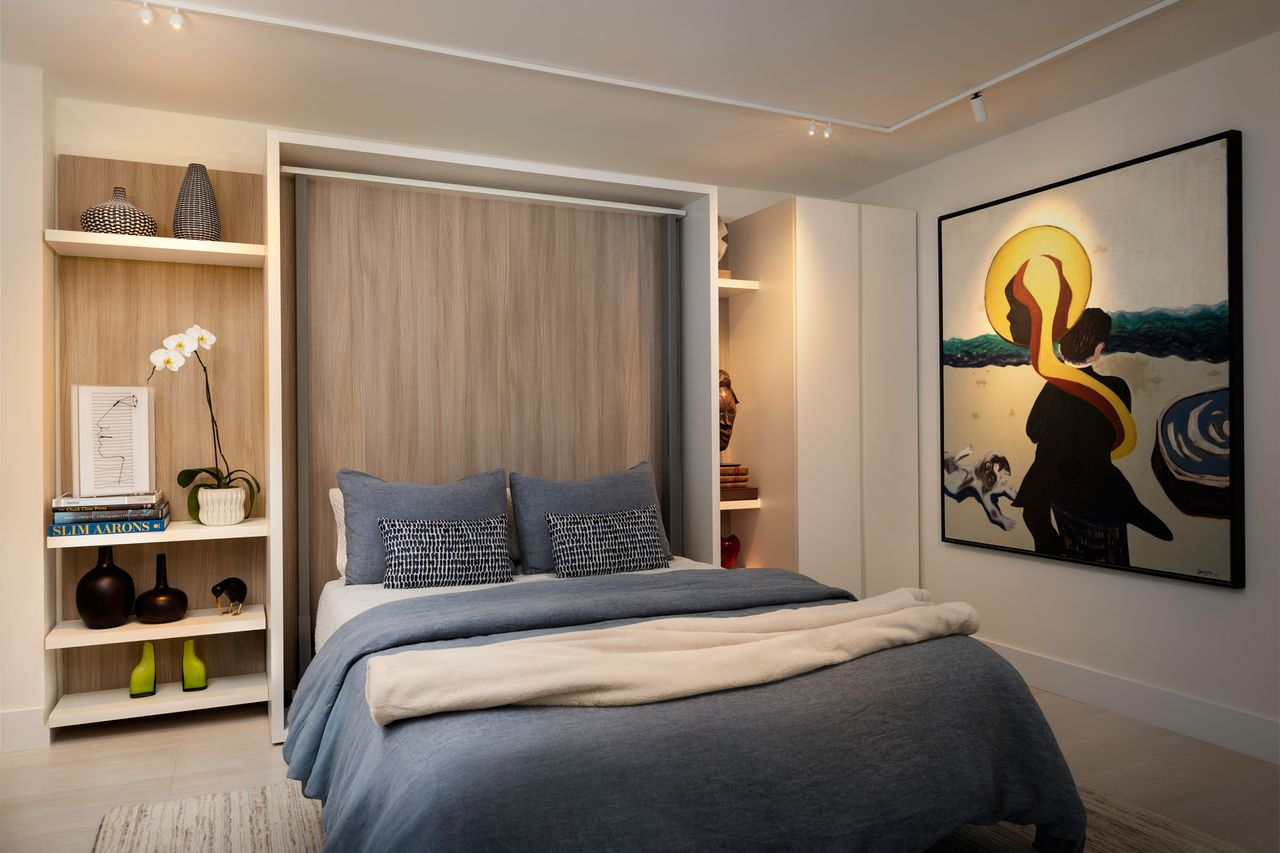
Ready for guests

Jack and Rafael presented an entirely different question.
They had a significant contemporary art collection and an extraordinary view, but their apartment wasn't allowing them to fully enjoy either. Their living room felt constrained while a second bedroom, used primarily as a home office and only occasionally for guests, occupied valuable space.
So we stopped thinking about what those rooms were called and started thinking about how Jack and Rafael actually lived.
The former guest room became part of their everyday life: a den, office and entertaining space that could transform into a private guest room when needed. A rotating wall system conceals a queen-size bed behind the television, while retractable panels close the space for privacy.
Lighting became equally important. Rather than treating it as an afterthought, we developed layers of ambient, accent and dedicated art lighting so their collection could finally be experienced as it was intended.
Nothing about that solution came from choosing an aesthetic first. It came from understanding what deserved more space in their lives.

A kitchen made for gathering 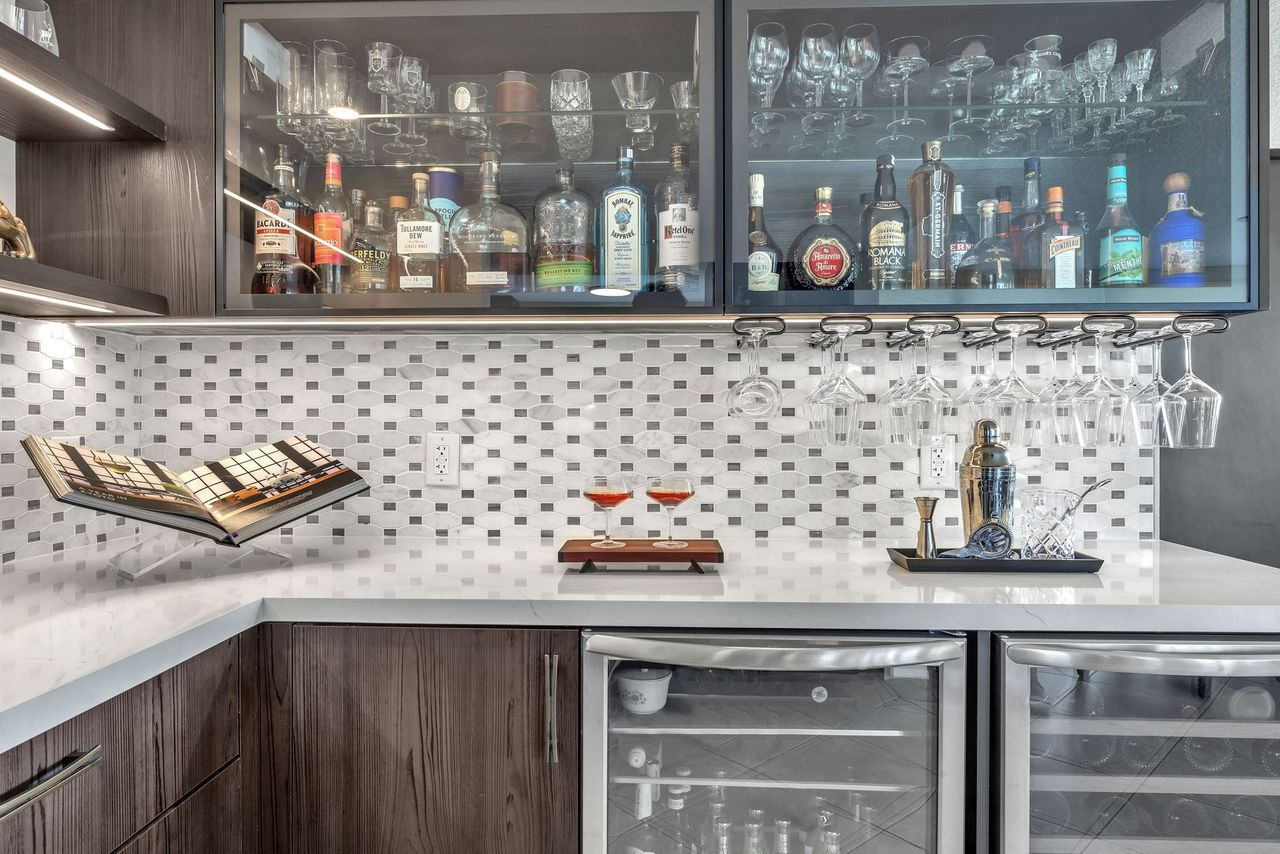
Gerry’s place for cocktails
For Mary Beth and Gerry, the defining story wasn't art or glamour. It was hospitality.
She loves to cook. He is the resident mixologist. Friends and family are a constant presence in their home, but their existing kitchen worked against that way of living. It was enclosed, with a small wet bar off to the side, separating the hosts from the very gatherings they loved creating.
The question became simple: How could the kitchen become part of the gathering rather than a place removed from it?
We opened the kitchen and connected it to an expansive new wet bar through a generous peninsula. Now cooking, making cocktails and spending time with guests happen as part of one shared experience.
Their appreciation for Chinese and Asian art and culture added another layer. The materials and finishes needed to provide a contemporary backdrop for objects they had collected over the years without competing with them.
Again, the design came from them.
The Thread That Connects Them
These homes don't share a color palette. They don't share a particular furniture style or architectural vocabulary.
What they share is a process.
Before I think about what a home should look like, I want to understand the person who will live there. Their routines. Their collections. The things they want to preserve. The things that have changed. And what they want their home to make possible now.
Because when we begin with an aesthetic, we're asking a person to fit into a design.
When we begin with the person, the design can become something much more interesting: an expression of who they are.
That is the thinking behind Design From Within™.
And it is why I hope no two Brickell Interiors homes ever look quite the same.
What would make a home feel unmistakably like you?


Comments