
Entering 2026 with Intention
- Dec 18, 2025
- 3 min read
Designing homes shaped by real life and personal meaning.

As we enter a new year, I find myself reflecting less on what’s next and more on what truly matters.
Design is often discussed in terms of aesthetics — what’s current, what’s beautiful, what photographs well. But living in a space is a very different experience than looking at one. A home shapes how we move through our days, how we rest, how we connect, and how supported we feel in our own environment.
In a city like Miami — dynamic, fast-moving, and visually stimulating — the role of the home becomes even more important. It should offer balance. It should ground you. It should feel like a place where life can unfold naturally, not something that needs to be managed or maintained.
That belief continues to guide how I think about design as we move into the year ahead.
Design Is an Experience, Not Just an Aesthetic
A beautiful home matters — but beauty alone is not the goal.
Well-designed spaces support the way people actually live. They create ease instead of friction. They invite calm rather than demand attention. When design is thoughtful, it doesn’t announce itself — it simply works.
I’m increasingly drawn to an approach rooted in balance, warmth, and meaning. Ideas often described as midimalism, warm minimalism, and neuroaesthetics aren’t trends to apply, but frameworks that help articulate something intuitive: homes feel better when they’re designed with people in mind.
The Value of “Just Enough”
I’m not interested in spaces that feel overdesigned — or overly stripped back.
Finding the right middle allows a home to breathe without feeling empty, and to feel layered without becoming overwhelming. Choosing fewer pieces, and choosing them well, creates clarity. It gives important elements room to exist without competition.
This approach leaves space for what matters most — the art you love, the objects you’ve collected, the furniture that supports daily life. A home should feel intentional and complete, but never rigid or precious.
Warmth Changes the Way a Home Is Experienced

Minimalism, when taken too far, can feel cold or impersonal. That’s not how a home should feel.
Warmth brings humanity into a space. Natural materials, soft textures, gentle palettes, and light that shifts throughout the day all contribute to an environment that feels supportive rather than performative.
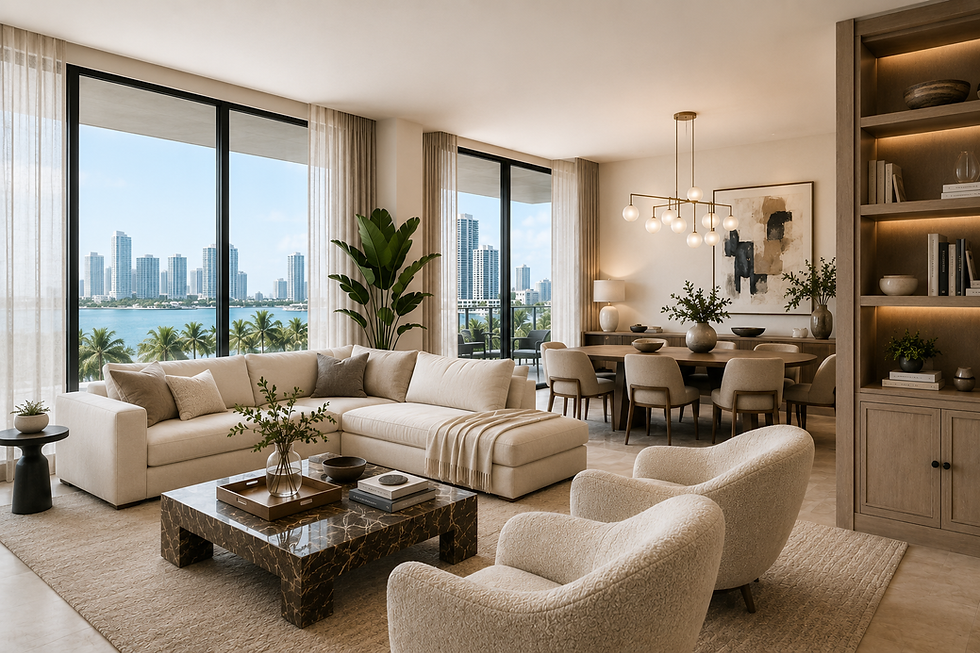
In Miami homes especially, warmth helps create a sense of calm against the energy of the city. Spaces feel restorative. They feel lived in. They feel welcoming — not staged.
Design That Supports Wellbeing
Design is experienced with all of the senses, not just sight.
Light, layout, material, proportion, and flow quietly influence how a space feels — how easily a family moves through it, how restful it feels at the end of the day, how supported everyday life becomes.
Neuroaesthetics may sound scientific, but at its heart it’s about how people experience a space emotionally and physically. That understanding gives language to something intuitive: when a home is designed with care, it feels grounding, calm, and deeply supportive.
This isn’t about theory. It’s about designing spaces that work with real life — spaces that feel good to live in, day after day.
Homes That Reflect the People Who Live in Them
This has always been at the core of my work.
The most compelling homes are not the most styled — they are the most personal. They reflect the people who live there: their stories, their rhythms, their values, and the way they move through daily life.
When a home is designed thoughtfully, personal elements don’t feel messy or accidental. They feel grounded. A calm, intentional foundation allows meaningful art, objects, and furnishings to stand out without needing to be overexplained or overdesigned.
Authenticity isn’t something to add later — it’s what makes a space feel real from the start.
Looking Ahead
As I move into this new year, my focus is clear.
I believe deeply that you can create homes that are meaningful and supportive without overdesigning them. By leading with warmth. By editing with intention. By designing around people, not perfection.
When spaces are shaped by real life, they naturally feel calmer. They function better. They age beautifully. And most importantly, they support the emotional and physical wellbeing of the people who live in them.
The goal has always been the same:To create homes that feel personal, grounded, and intuitive.Homes that reflect the people inside them.Homes where families don’t just live — they thrive.

Comments